Alex Koch · 22 September 2026
Visualizing Indexation Recovery Timelines Following Registrar Account Transfers in Enterprise Websites
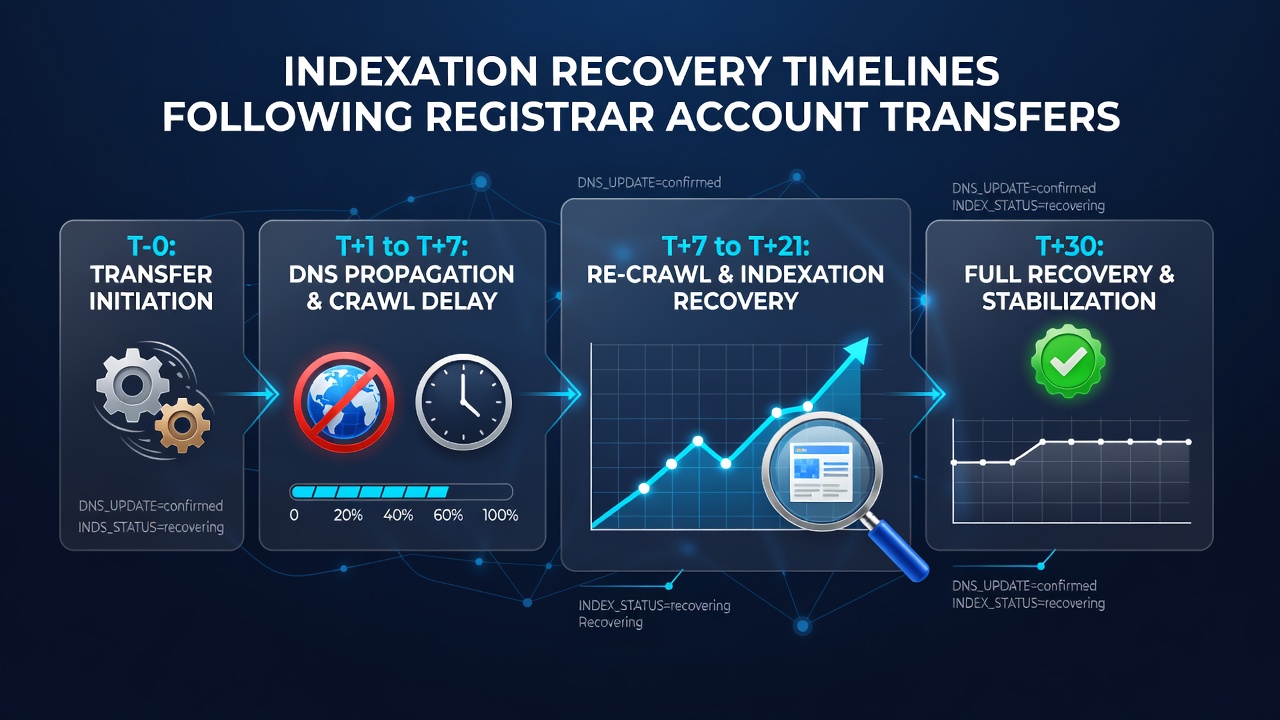
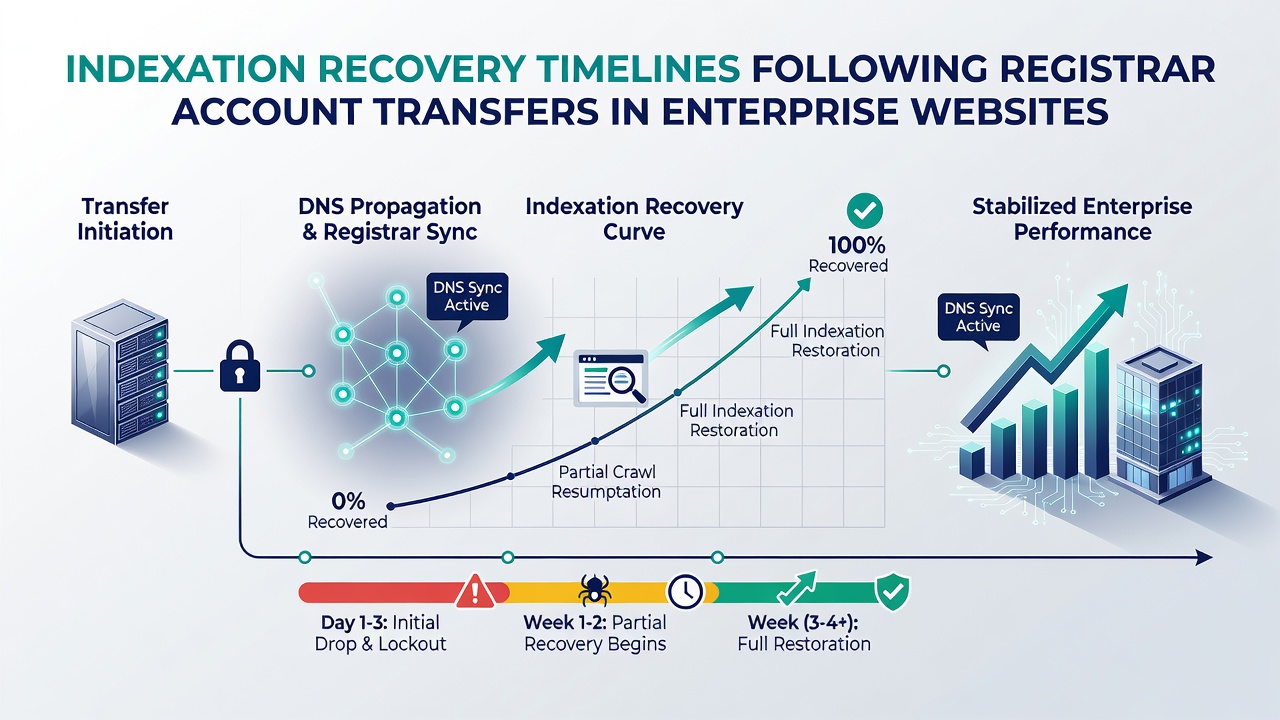
Enterprise websites that complete registrar account transfers often experience fluctuations in search engine indexation, and visualizing the recovery timelines provides clear data on how quickly pages return to full indexing status. The process typically begins with a transfer request that updates the domain's authoritative records, after which search engines like Google re-crawl and re-evaluate the site's content over a period that ranges from several days to multiple weeks depending on site size and crawl frequency. Researchers have tracked these patterns through analytics platforms that plot indexed URL counts against time, revealing consistent phases of initial drop followed by gradual restoration.
Understanding the Mechanics of Registrar Transfers
Registrar account transfers involve moving a domain from one accredited provider to another, and this step can temporarily disrupt the signals that search engines rely on for scheduling crawls. Data from large-scale enterprise migrations shows that DNS propagation times, combined with potential authentication changes, lead to reduced crawl rates in the first 48 hours post-transfer. Observers note that once the new registrar confirms the transfer, the domain's WHOIS data updates, yet indexation metrics require additional monitoring to capture the full recovery arc. Studies indicate that enterprise sites with millions of pages see more pronounced dips because search engine bots prioritize high-authority domains during re-verification cycles.
Key Factors Influencing Recovery Timelines
Multiple variables shape how long indexation recovery takes after such transfers, including the domain's historical crawl budget, the volume of submitted sitemaps, and any concurrent changes to robots.txt files. Evidence from industry tracking reveals that sites transferred during peak business periods recover faster when accompanied by active use of Google Search Console to request re-indexing. In September 2026, aggregated reports highlighted that enterprise domains averaging over 500,000 indexed pages required an average of 21 days to reach 95 percent pre-transfer indexation levels when no additional technical issues arose. Shorter timelines appeared in cases where the new registrar maintained identical nameserver configurations, allowing uninterrupted propagation of existing records.
Methods for Visualizing Recovery Data
Analytics platforms enable teams to generate line graphs and heatmaps that track daily indexed page counts, and these visualizations highlight inflection points where recovery accelerates. One common approach layers data from multiple sources, such as server log analysis combined with Search Console reports, to create composite timelines that show both crawl frequency and indexation status. Those who have studied enterprise transfers find that scatter plots comparing recovery speed across different industries help identify outliers caused by site architecture differences. Tools that export CSV files of indexed URLs over time allow further processing into custom dashboards, turning raw metrics into actionable visual summaries without requiring manual daily checks.
Practical Examples from Enterprise Migrations
Take one retailer that shifted its domain registrar while maintaining the same hosting infrastructure, and the resulting visualization displayed a sharp 40 percent drop in indexed pages within the first week followed by steady climbs through the third week. Another case involved a financial services site that submitted updated sitemaps immediately after the transfer, and the plotted data showed indexation returning to baseline levels in just 12 days. These examples demonstrate how visual representations clarify the impact of preparatory steps like pre-transfer crawl audits, which reduce the duration of any temporary de-indexation phases.
Data Patterns and Industry Benchmarks
According to ICANN registrar transfer statistics, thousands of enterprise-level domains complete such moves each quarter, and the associated indexation data consistently follows a predictable recovery curve when visualized properly. Research from academic sources including the MIT Media Lab has examined large web datasets to confirm that recovery speed correlates strongly with pre-existing domain authority scores. Visual tools that normalize these timelines against site traffic volumes provide clearer comparisons across different enterprise sectors, revealing that media and e-commerce properties often rebound more quickly than those in regulated industries.
Tools and Techniques for Ongoing Monitoring
Specialized platforms integrate API feeds from search engines to automate timeline generation, and users configure alerts that trigger when indexation metrics deviate from projected recovery paths. Enterprise teams frequently combine these outputs with internal CRM data to correlate indexation changes against business metrics such as lead generation rates. The resulting visualizations support decision-making around resource allocation for technical SEO adjustments during the post-transfer window, ensuring that any prolonged dips receive targeted attention through enhanced internal linking or content refreshes.
Conclusion
Visualizing indexation recovery timelines after registrar account transfers supplies enterprise website managers with precise, data-driven insights into the re-indexing process. By tracking metrics through structured charts and layered reports, organizations maintain visibility into recovery progress and adjust strategies based on observed patterns. Continued refinement of these visualization methods supports efficient management of large-scale domain operations across varied industries.