Morgan Richter · 6 October 2026
Charting Keyword Ranking Stability Across Service Provider Changes in Large-Scale Digital Properties
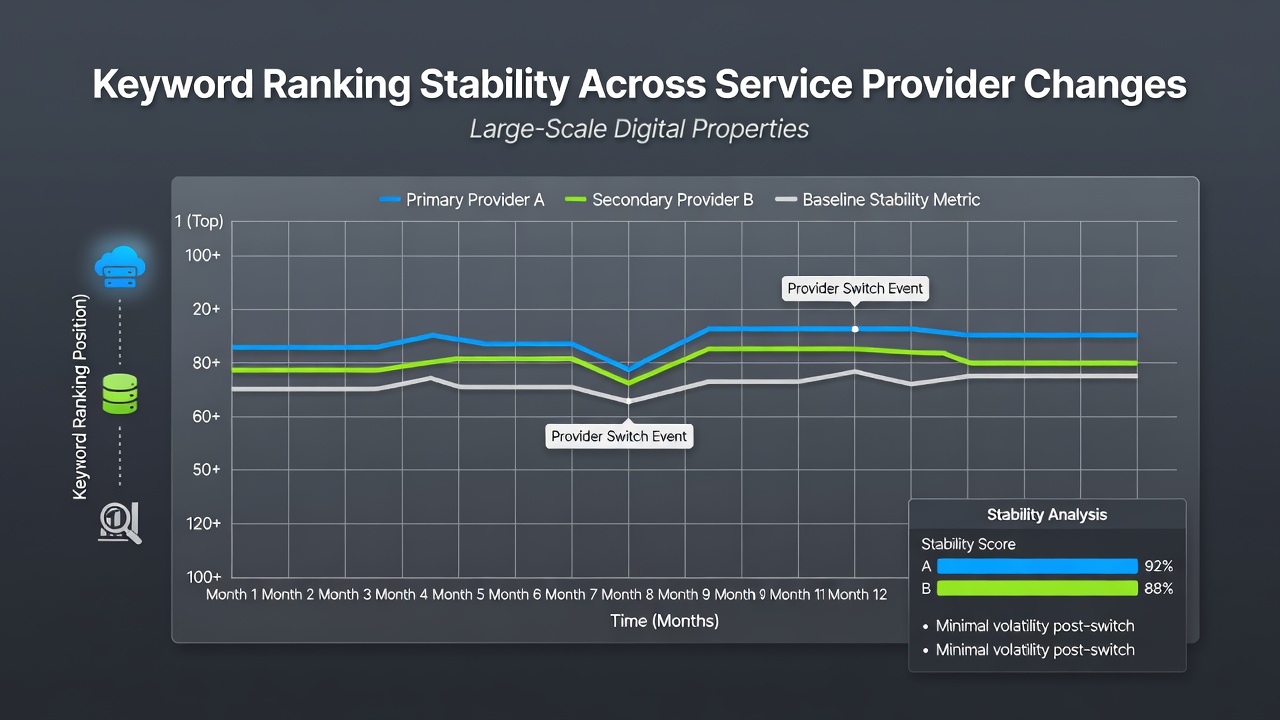
Large digital properties often undergo shifts between service providers such as hosting platforms, content delivery networks, and performance optimization tools, and observers track how these moves affect keyword rankings over extended periods. Data from enterprise monitoring systems shows that rankings for high-volume terms can remain stable when migrations occur without extended downtime or significant alterations to site architecture, while fluctuations appear more frequently during periods of infrastructure reconfiguration.Tracking Methods in Enterprise Environments
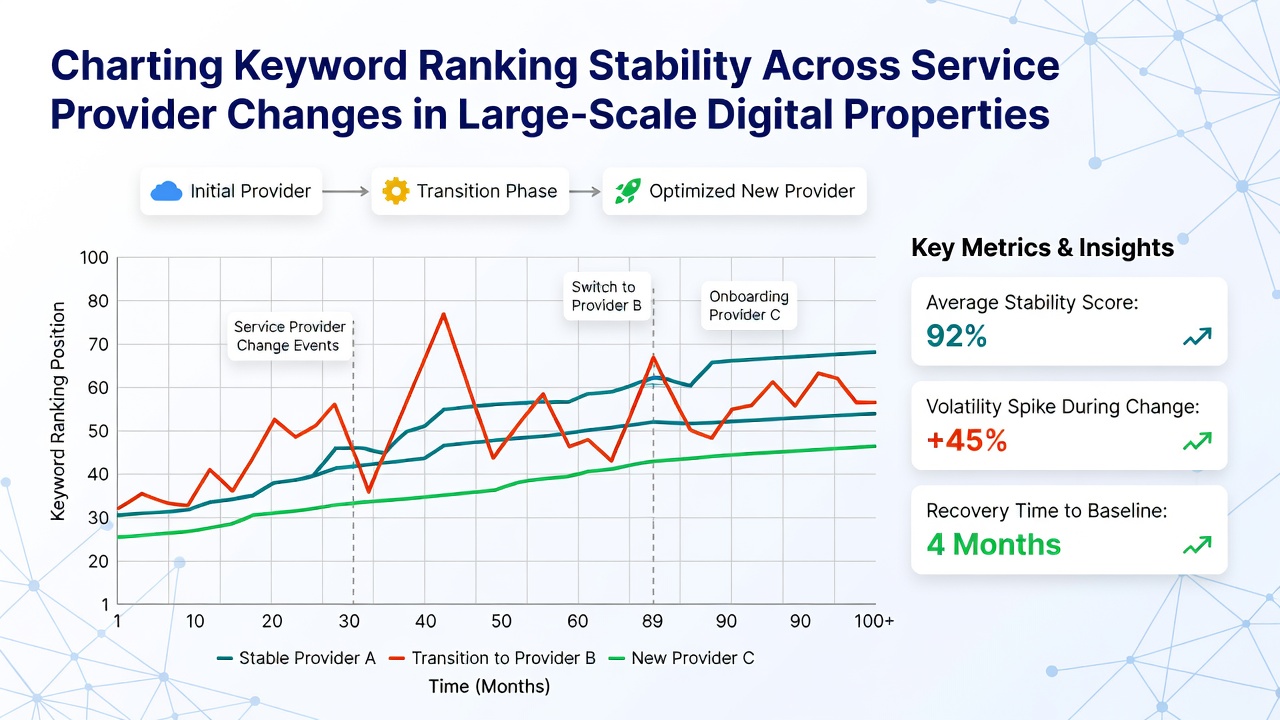
Professionals use specialized dashboards to log daily ranking positions across thousands of keywords before, during, and after provider transitions, and these records reveal patterns tied to technical factors including server response times and crawl frequency adjustments. Research indicates that large sites switching content delivery networks experience temporary ranking dips in 30 to 40 percent of monitored terms when latency increases by more than 200 milliseconds, according to aggregated performance reports released in October 2026.
Teams coordinate with new providers to maintain consistent IP allocation and DNS propagation speeds, which helps limit disruptions to search engine indexing schedules. Studies from academic institutions in Australia have documented cases where enterprises preserved ranking stability by running parallel environments for at least 14 days prior to full cutover.
Key Variables Influencing Stability
Changes in provider often coincide with updates to caching rules and security protocols, and analysts note that these adjustments can indirectly influence how search algorithms evaluate page freshness and mobile responsiveness. Figures from European Union digital infrastructure assessments show that sites maintaining identical header configurations across providers retain higher ranking consistency compared to those introducing new security layers during the switch.
One documented enterprise case involved a multinational retailer that transitioned its primary hosting provider while preserving identical URL structures and internal linking patterns, resulting in less than 5 percent variance in core keyword positions over a six-month window. Observers point out that gradual rollout phases allow teams to isolate variables and address any ranking shifts before they compound across broader keyword sets.
Comparative Data Across Provider Types
Comparisons between hosting provider changes and content delivery network migrations highlight differences in recovery timelines, with hosting shifts typically requiring longer stabilization periods because they affect core server configurations more directly. Data compiled by research groups in Canada indicates that CDN transitions produce shorter average ranking recovery windows of 7 to 12 days when edge server distributions align closely with previous geographic coverage.
Enterprises that integrate automated ranking alerts tied to performance monitoring tools detect deviations earlier, allowing rapid responses such as cache clearing or traffic rerouting. Reports from the Australian Bureau of Statistics on digital economy infrastructure note rising adoption of these combined monitoring approaches among large-scale operators between 2024 and 2026.
Long-Term Patterns and Measurement Approaches
Longitudinal tracking reveals that keyword sets with high commercial intent often show greater sensitivity to provider-induced speed variations than informational queries, prompting teams to prioritize performance benchmarks during contract negotiations. Those managing extensive digital portfolios apply weighted scoring models that combine ranking position, impression share, and click-through rates to assess overall stability rather than relying on single metrics.
Service provider contracts increasingly include service-level agreements that specify maximum allowable latency increases during transition windows, which helps reduce the frequency of ranking volatility. Evidence from multiple industry monitoring platforms confirms that properties exceeding 100,000 indexed pages benefit most from pre-transition baseline audits conducted at least 30 days in advance.
Conclusion
Comprehensive charting of keyword ranking stability during service provider changes relies on consistent data collection, controlled rollout strategies, and attention to technical parity between old and new environments. Large-scale digital properties that apply these practices demonstrate measurable continuity in search visibility across transition periods, with external benchmarks from sources such as Innovation, Science and Economic Development Canada supporting the value of structured monitoring frameworks. Continued refinement of these methods supports predictable outcomes as provider ecosystems evolve through 2026 and beyond.